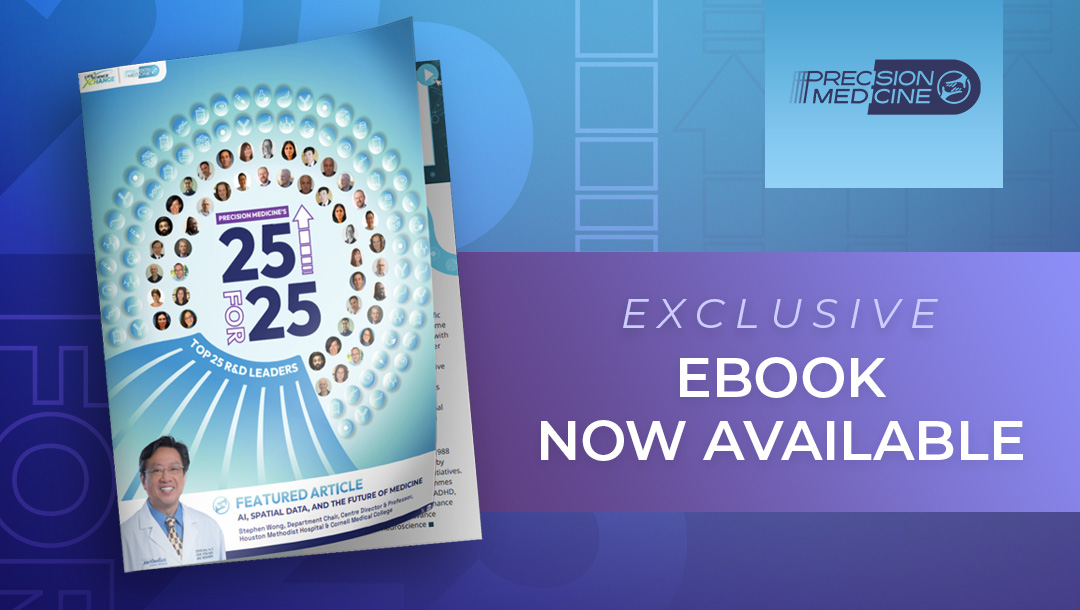
Our Top 25 R&D Leaders of ’25 eBook brings together the most influential thinkers, innovators, and trailblazers shaping the future of targeted therapies, spatial biology, biomarkers, multi-omics, and AI‑driven discovery.
Created through the collective expertise of our LifeScienceXchange Academic Steering Group, this eBook exists to connect disciplines, accelerate innovation, and empower the scientific community with the insights needed to bring the next generation of treatments to patients—faster, smarter, and at scale.
Why This eBook Exists
Precision medicine is advancing at an unprecedented speed. Yet the challenge remains: how do we translate complex biological data, emerging technologies, and new analytical capabilities into meaningful clinical impact?
This eBook was developed to:
Unite leaders across spatial biology, biomarkers, and multi-omics
Showcase real‑world case studies from research groups
Highlight the innovations reshaping diagnosis, therapy selection, and disease monitoring
Provide practical insights you can apply across R&D, translational science, and clinical development
Whether you're a researcher, clinician, technologist, or strategic leader, these perspectives bring clarity to the rapidly evolving precision medicine landscape.
What You’ll Gain by Reading
Emerging trends and transformative technologies driving the next wave of precision medicine
How spatial genomics, digital pathology, and multi-omic integration are redefining disease understanding
Breakthrough methods in biomarker discovery, liquid biopsy, and advanced imaging
Strategies for managing tumour heterogeneity, building better disease models, and improving translational success
Expert commentary on AI’s expanding role in biological interpretation and clinical decision‑support
Every chapter delivers high‑value insights curated from real scientific work — not theory, but actionable innovation.
Featured Spotlight: Stephen Wong on AI, Spatial Data & the Future of Medicine
Among the standout contributions is the article by Stephen Wong, Department Chair and Professor at Houston Methodist Hospital & Cornell Medical College.
His piece explores:
How AI and large language models can enhance — not replace — human reasoning in biomedical research
The integration of spatial biology and computational analysis to prioritise drug targets with unprecedented accuracy
Novel insights into cell-cell communication, brain disease mechanisms, and tumour microenvironment complexity
The future vision for combining high‑content biology with advanced computational pipelines to transform precision medicine
Wong’s perspective is a must‑read for anyone invested in the intersection of AI, spatial intelligence, and next‑generation healthcare.
Your Next Steps
Explore the breakthroughs, trends, and expert guidance driving the future of precision medicine.