Executive Interview with Sudeshna Fisch, Pfizer/Harvard
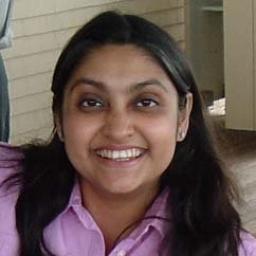
Format: 14 minute interview
[0:02] Hi everybody, and welcome back to another Oxford global interview. Today, we are joined by Sudeshna Fisch, a former director at Pfizer with over a decade of experience in bridging the gap between discovery and clinical success. We will be exploring a bit more about biomarkers and their impact on the field of precision medicine today. So Sudeshna, thank you for joining us today. And yeah, the first question from me is, as someone in precision medicine with leadership skills, what drew you to translational science and biomarker strategy in the first place?
[0:40] First of all, thank you, Lucia for inviting me to do this interview. I would say my journey is really, you know, the one word should define it, which is serendipity, because I started with my early work at Harvard and the broad and then I was invited by leading pharma to kind of join their development team. So I spent a lot of time in research, drew me into development, and just brings me full circle to this research and development.
You know that there are two arms of sort of a long pipeline, and I think translational science is sort of like, you know, it's really important these days, because it connects discovery into a patient impact, something that I'm really drawn to. And if you're on target, on mechanism, and truly understand diseases as a mechanism, which is where biomarkers lie, the importance of biomarkers, I think that enables decision making.
And it's just really important that we balance our scientific curiosity with like data from biomarkers that guides us to translate, you know, so I'm really curiosity driven, but in biomarkers, they need to be actionable.
[1:47] That's great. Thank you very much. And could you share a specific example with the audience of a biomarker program that you worked on that successfully made the journey from discovery into the clinic and maybe touch on a couple of the challenges you faced.
[2:03] Sure, I'll try to do in a short you know that journey is usually long, but challenges are the are many and but I guess I would start with the success story in the area of fibrosis. We this is my work at Harvard, and it's published. So we began with a couple of compounds that were known in to, you know, to perturb some something around the fibrotic pathway, but not much was known about the target.
And the reason why you start with the target, because target and biomarker are interlinked, and this is why, so you can test a target in two models, and not to get into the details, but each of the models, in vitro, in vivo, molecular imaging, whatever mode you choose, to study a target or a biomarker. Sometimes they are reproducible, sometimes they are not. Lucky for us, we found a both a target and a biomarker in the area of cardiac fibrosis that really led that product to be fully fleshed out and build our confidence to advance into a major company. So it's now in the clinic as that, and it's also from published work so and so we essentially, the way I saw this was that you can start with a nice, to know, exploratory signs, but then you must have validation, and that's where the biomarkers and understanding mechanism and biology come in, which I have found again and again, both in my research and my development, to be pivotal to actually making the data actionable, so that you can actually make a difference in the patient's lives.
So key words that I would like to bring about for this would be, you know, really important to know proof of mechanism, proof of concept, and proof that in order for your science to prevail the test of time and patience, you have to really pin down the mechanism and biomarkers are key.
I guess I would say a challenge very quickly was that, again, the reproducibly, the scientific credibility of non clinical model with biomarker and mechanism data is really important, because when you go into patients, you see a lot of patients having a heterogeneous representation, and you need to understand where the data differences are coming from, and again, being data driven means that you understand that every challenge can be an opportunity for you to understand the data better.
[4:29] Thank you very much. And I guess in our previous conversation, we touched on the importance of partnership and collaboration. So how do you engage with consortia advocacy groups to ensure that biomarker strategies reflect patient needs?
[4:46] This is really important, and it's a great question. I consider partnerships to be the force multipliers, you know, in translational medicine and not no one lab or one company working in a silo. Has really the full picture. Doesn't matter what indication or assets you are. So by building the global network, the and tapping into the global local you know also local consortia, academic industry partnerships, and together bringing also the advocacy groups early, like the patient advocacy groups, the caregiver groups in certain rare diseases are really paramount.
I think they bring in their lived experiences, which really transforms, again, an exploratory science into an actionable science, like you're actually making difference in patients lives. If you look at the real world evidence and the data that you can generate through consortia, which I've done, very lucky for me, we formed a valuable partnership with a global ecosystem, FinnGen, and we published together.
So collaboration also makes for better signs, because you bring in different vantage points from different groups. So I think it's really important as we push through certain translational science, both in rare and common diseases. And so, you know, I think science will prevail if we continue to collaborate across
[6:10] Thank you very much. And how do you envision AI data integration and digital tools accelerating biomarker discovery and improving translation over the next few years?
[6:23] Yeah, that's a loaded question. It's really important that we understand and interpret AI accurately, and we use actionable intelligence to inform AI. So, you know, I've been at the lucky recipient. I mean, I just published this paper that I'm going to talk about, but also it's really important to understand that AI can do a lot of things, but AI training models are key and pivotal to our uncluttering and making meaning of data.
So AI does allow us to turn data into a directional manner is, that's my feeling, but it can, and in it, the power is that it can integrate a lot of different types of biomarkers, like it can integrate omics, which is molecular imaging. It can incorporate clinical notes. And so it shortens the discovery site and the translation cycle, and it makes things faster, cheaper, and, in my opinion, smarter, but with a cautionary note that garbage in, garbage out, meaning you train the data properly, and you have to your proper bias checks and ethical AI is really important to me.
I think we need to be understanding of how to generate unbiased algorithms. And, you know, I don't see it as completely, for lack of a better word, like it's very complex. So you need to understand how the AI thinks and some of the deep learning, machine learning generative AI, we need to also better understand how they create their data processes.
But I think precision at the in the in the at the end of the day in precision medicine, we have to think about digital integration. And AI is a very user responsible. AI is going to accelerate medicine and make it, make it, make it easier for us to get to the right patients faster.
[8:27] That's great. Thank you for your insights. And I guess we all know that 2025, has been quite challenging year for R&D in terms of layoffs across the industry. So what would your message to researchers and scientists be who may be feeling uncertain about things right now?
[8:47] Yeah, I'd like to take a moment of silence first, but I would say that it is a very tough year, but in not lots of layoffs and structuring and but you know, I guess my message to all the scientists and industry and researchers worldwide is this that just we have to remember that science is bigger than a single company or a single quarter or even, you know, healthcare conferences that come in early January. But and your skills every scientist skills and creativity and resilience, they really matter, in fact, more than ever, because we really need to band together and understand how new models of collaboration, new models of startups and new models of digital health, can push us forward in a more integrated fashion.
And I think this is also a moment that I feel that we can reimagine how we do R&D. It's a pivotal moment, because there are things we can do better and there are things we can do faster, but this is also a time for reflection. But I would say, stay connected, stay curious, and. And keep innovating, because ultimately you have to innovate at the end of the day, and while discovery to clinical development is a long game, but I think history shows us that ultimately science will prevail and innovators will come from all walks of life. So stay with science.
[10:20] That's great. I like the optimistic outlook. And as a woman leading in translational science, what advice would you have for women early in their careers who aspire to have leadership roles in biotech and pharma like yourself?
[10:37] Yeah, I think that's a really, it's a question close to my heart, because I serve as mentors to so many young women who want to be scientists, you know, either on academia or industry or, you know, thinking about the future. My advice to any woman or woman scientist or anyone actually is, you know, lead with your signs and with your voice. And I would say, based on my experience, I would say, don't wait for permission. You can create your own space at the table. Seeking out mentors and also allies and sponsors in a large matrix organization is really important and help others as you climb the ladder, really important, and it's something that I feel very close to, is that helping other women is scientists scale the heights is really it's one of my passions.
11:42 Challenges will exist. You know, as I sit at those tables, there will be different voices, but during those conversations, sometimes some of it may be difficult, you may find opportunities to shape the culture of both science and leadership, and take that opportunity. Don't wait for that opportunity.
12:01 And I think authenticity to me in leadership is important, so be yourself. I know a lot of people talk about this very loaded term imposter syndrome. I don't know what that is, but I will say that don't suffer from it. If you have a question ask, don't be afraid to show up as yourself fully, because authenticity really will drive you to have the right kind of leadership that science needs. And the next generation of science really needs more diverse voices. So the time to step is now and so, so go for it perfect.
[12:36] Thank you very much. And final question from me, Sudeshna, is we are very excited to welcome you Oxford Global's Biomarkers and Precision Medicine US Congress. And what is the key takeaway message from your presentation that you would like to leave with the audience?
[12:55] Yeah, the really, the key message would be, you know, the future of precision medicine is already here. My talk is going to be about using AI and machine learning to uncover patterns in patient characteristics to enable trial design and even perhaps discovering old biomarkers, in this case, ECG, for new purposes. So science plus AI is sort of the main theme, and I hope you take away that it's really important to pursue these AI tools to better understand our patient population. Perfect.
[13:30] Thank you very much. Thank you, Sudeshna, for sharing your insights and some of your personal experience with us today, and we look forward to welcoming you at biomarkers us and precision medicine Congress.
[13:46] It's been a pleasure working with you. Thank you.