Altum Sequencing Interview: NGS technologies revolutionising cancer diagnostics
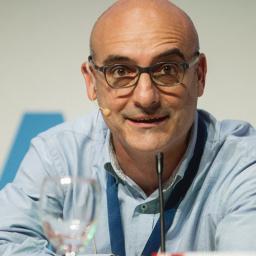
Format: 18 Minute Interview
0:06
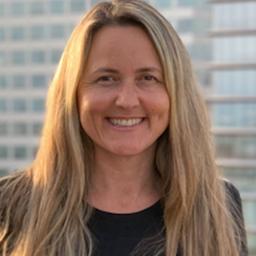
So good morning and welcome to today's interview with CEO Marina Planas and President and Co-Founder Joaquin Martinez on Altum Sequencing's next generation sequencing technologies aimed at revolutionising cancer diagnostics and treatment monitoring.
0:25
So thank you very much for your time today.
0:28
So we'll jump straight into the first question, which is for both of you - What led you to found or join Altum Sequencing and how would you describe the company's mission?
0:41
So, I can start.
0:44
We, founded this company because we are very expert in the field of MRD in our hospital and we developed several patents and on this regard.
0:57
For the reason we want to expand the utility of our methodologies based on MRD detection by the generation sequencing in other parts of the world and expand our acknowledgement universally.
1:14
For the reason we create this company, we start five years ago and we are working on that.
1:26
From my side, I just recently joined Altum Sequencing and I really was impressed about the technology behind and also the background of scientific and also the point of view that the founders had that at the end they are clinicians, right?
1:45
So they know exactly why we need to perform this test and the use of this test.
1:53
I really love when you work for something that has a scientific background but has impact in the people, right?
2:04
Because at the end, what we care and what we want is to put the passion in the centre and try to make their lives easier when you are processing.
2:20
So this is basically why I join Altum Sequencing.
2:29
Fantastic.
2:30
Thank you very much for your answers.
2:33
And so the next question is again to you both - please discuss the scientific, technological or business model innovations behind your success.
2:45
Yeah, I will say that you know Altum is not just this developer, right.
2:50
We just not doing just services always.
2:53
I say that we have a data and software driving company, right, because with a very clear version to become a companion diagnosis platform at the end, we based in biomarkers, right.
3:09
Yes, of course our core is the lab, but I think our differentiation and why we are in this state-of-the-art is based in our patient specific emerging detection, selecting the biomarkers and also our sensitivity that I think here Dr Martinez can make and describe our product itself.
3:40
Yeah.
3:41
We are a mix of technology company and also the background of the clinical expert to develop very actionable products for the oncology market.
3:58
So our model basically is we want to provide tools to the doctors to make a better follow up on the on the patients.
4:14
But what we see now is an interest and what we are working so much is with pharma in order to give value and to stay ahead in the development of the drug and also trying to develop together these biomarkers that is very important for them, right.
4:39
So I will say that we build a digital biomarkers library and we integrate with pharma trials also we have real world data and, and all these mix taking into account the regulatory pathways, right?
4:57
That in this scene is important.
5:02
So what we want is make this development, I say always our ecosystem, everybody's a win relationship.
5:18
We have the pharmacy for the drugs, we have the clinician and the doctors for the for the treatments and we have the patients.
5:27
So for us in the middle always we think about the person and the and the patient.
5:34
Fantastic.
5:34
Thank you both very much.
5:36
Thank you.
5:37
And Joaquín, your platform integrates AI, circulating tumour DNA detection, and next-generation sequencing - how do you ensure clinical utility across such a complex technology stack?
5:51
Yeah, we are.
5:53
We are working in a very robust way because we are having data for the most difficult part is to have data of clinical trial and patient.
6:06
And we have a lot of data from this regard.
6:11
And also we are trying to develop high quality data and also employing artificial intelligence to select the best marker and eliminate error to get the marker probably in the future the BRD certificate to improve the quality of our test.
6:41
Fantastic, Thank you very much.
6:43
What makes CloneSight and your broader MRD detection approach different from other circulating tumour DNA technologies currently in use or development?
6:54
Yeah, we are developing very versatile test because we are we can integrate not just the detection of the of the DC with a high sensitivity.
7:12
Our test is very sensitive more than other because we are doing approach that is patient specific and this give high sensitivity also a specificity.
7:31
And also we are we can add other tests that like - we know clonal evolution, we can follow the merging of resistant mutation in specific genes for targeted fibre rapidity and we can combinate both.
7:50
And also we have developed other tests called Aloci that we can also follow cell allergenic cell therapy and we can combinate whatever we want these three tests.
8:05
And this is very versatile.
8:06
And also the most important thing is that we have clinical vision.
8:14
We not just give the result or so we can give our clinical vision of the result.
8:24
Fantastic, Thank you very much.
8:26
What significant milestones has Altum Sequencing achieved to date in the area of AI or Machine Learning?
8:36
Yeah, I can start with the error separation.
8:40
Error separation is, we are employing tools to identify error in the sequence in the sequence in spite land to increase the sensitivity of the of our world technology.
8:58
This is very new probably for the reason we have a very good result in insensitivity.
9:05
And regarding the match of running I will give the work to Marina.
9:13
Yeah.
9:13
So we are working with our consortium also to implement this in our technology.
9:21
And we have a great resource in the terms of machine learning for the noise.
9:26
And we are starting also with generative AI, you know who doesn't apply generative AI today.
9:34
So we are applying just for the interpretation of the visual interpretation of the results.
9:41
This is starting and this is ongoing.
9:44
But I think it's a must for us to apply machine learning AI because I will say it's not the future is the present, right?
9:56
Absolutely.
9:56
Yeah.
9:58
Thank you very much.
10:00
So if we look at now some more on the clinical impact and collaboration.
10:04
So firstly, Joaquín, your work focuses on breast cancer and lymphoma - why are these areas particularly underserved, and how is Altum Sequencing positioned to change that?
10:18
Yeah, Yeah, this is very important.
10:21
We are work focus in lymphoma.
10:23
We have clinical experience or clinical results in several diseases like leukaemia, myeloma, lymphoma and some solid tumour.
10:36
But we are focusing lymphoma for MRD detection because now we have a lot of experience.
10:43
We have several publication on this.
10:47
We have a very, very good results.
10:50
We can combine the three tests, ALO, chronal evolution and MRD in the same test.
11:01
And we know there has been developed a lot of new therapies in lymphoma like CAR T-cells therapy, allergenic CAR T-cells by specific probably in the future.
11:15
So biomarkers has been used in the clinical setting to select patient to be treated more base or less based on the MRD detection in peripheral blood.
11:33
For the reason, we choose lymphoma and also the competition is lower than in other areas and we are we are in a very good position at this moment.
11:47
And regarding breast cancer, we have developed a very interesting test, very, very sensitive and we have very preliminary, very, very interesting preliminary results in the prediction emerging resistance mutation in the in the structural receptor 1 to predict the resistance on some therapies.
12:16
And we are very focused on with some pharmaceutical companies to work on that.
12:22
And also we have some project about the prediction of the relapse very, very early before relapse with our test probably in the future could be a tool to treat patient before relapse.
12:42
And for the reason we are working on in those in this area.
12:45
But we have data in a lot of solid liquid tumour.
12:53
Yeah, let me add just two figures right in.
12:58
And he's also published in this papers that we have been collaborating.
13:03
And for the breast cancer, what we saw is that we can detect the false positives, right?
13:12
So we can detect around 39% of false positives.
13:18
So is a change of paradigm, right?
13:21
So we can avoid to have chemotherapy for healthy people.
13:25
So for us is important as mentioning within the patient in the centre, right?
13:30
So I'm also, as Joaquín was mentioning, so we can advance, right?
13:35
So over five years, imagine so you can tell to your patient, you know that we can monitor, but then you will see and you will know that in five years it comes again and similar figures we'll have with follicular in terms of the false positives.
13:55
So it's important that we take care about the patients and how we can, you know, our objective right is to thanks to our test to, to give the right drug and the right disease.
14:10
And no one give tools to the doctor say when to stop or when to continue.
14:16
Thank you very much, both, brilliant.
14:21
Thank you.
14:22
And Marina staying with you.
14:24
How do you envision partnerships with pharma companies as MRD becomes a clinical trial endpoint?
14:32
Yeah, so as mentioned for us and we see a change of mindset and I see that our tests can be a win, win relationship with all the farmers.
14:44
Why?
14:45
Because we can be a trial accelerator because we can work together with a pharma to detect the molecular response and the relapse months ahead of imaging or clean Canon points, right that today will have less sensibility so we can enable for a faster go no go decisions in this early phases trials with the with the pharma.
15:11
Also, we can be a dynamic CDX development so we can develop value markers strategies with pharma.
15:18
So also starting from the beginning for the political validation to later on to the prospective CDX pathways, right, because we can personalise and we can customise our panels to the new drugs targets our resistance in the mechanism the real time.
15:37
So our goal, right always, I say, is not to make MRD not just a biomarker, but a decision driving to unlock faster approvals and more personalised therapies.
15:51
So, you know, we want to democratise our test and everybody has to have access to that.
16:01
Yeah, I, I would like to add something else.
16:06
I think for us it will be very important for our goal is to be in the clinic in to take the to make this decision in 15 year and that one of our tests should be approved by the EMEA or the FDA to drive the treatment.
16:56
So from my side, what I envision is what I said is that providing these our tests and our work to work closely with the farmers, with the healthcare system that to change the paradigm how oncology now is diagnostic and doing the follow up of the oncology, right.
17:20
So I will say that from a lab, we want to change now with the lab services to a platform of data, right?
17:28
So our server and data infrastructure will power or digital your market discovery CDX development and adaptive trial designs.
17:40
So to bill this win-to-win ecosystem right and to becoming indispensable to the pharma, the payers for the health system and at the end, always putting the patient in the centre.
17:57
And you know, cancer is one of the biggest concerns in the in the world.
18:03
So one in two men and one in three women will have cancer over our lives.
18:10
So I think we are doing a great job and we want to make an important advance in this cancer journey.
18:22
Fantastic.
18:23
Thank you both very much.
18:24
And I think with that, we will end the interview there.
18:27
Many thanks again to both Marina and Joaquín for their time today and for sharing such interesting insights on Altum Sequencing’s innovative work in precision oncology.
18:39
Thank you both very much.
18:41
Again, thank you so much.
18:43
Thank you very much and thank you for the opportunity to explain our company.