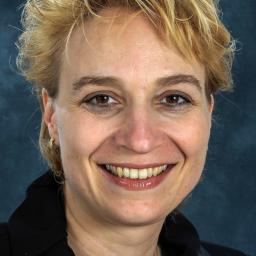
Interview with Viola Heinzelmann Schwarz on the Swiss Tumour Profiler (TuPro) study and OV Precision trial
Format: 20 Minute Interview
0:07
Good afternoon and thank you to Viola Heinzelmann Schwarz, who is joining us today to discuss her central role in the Swiss Tumour Profiler study, OV precision trial and innovation in precision oncology.
0:21
Thank you very much again, Viola, for your time today.
0:24
You're welcome.
0:26
Great.
0:27
So if we get started with the first question, which is to ask you- What inspired you to design a trial like TuPro, which goes beyond conventional genomic profiling and incorporates multi-omics, functional assays and spatial biology?
0:43
So to my profile is really a consortium approach of several institutions and of several people.
0:50
And I didn't design the overall trial.
0:54
I've actually designed the ovarian cancer part of it.
0:58
So what we did in the Tumour Profiler study is actually profiling 3 different cancers to show the principles that it's working from a principal point of view.
1:08
And that is really ovarian cancer where I come into the field as an ovarian brain cancer specialist.
1:15
And then we have AML acute myeloid leukaemia.
1:20
And then the third cancer is actually Melanoma, cutaneous Melanoma.
1:24
So these are the three cancers that we profiled the rationale and I really want to particularly mention at this point Andreas Wicki and Bernd Bodenmiller who are my co-leads in the tumour profiler Centre.
1:39
So we have three leadership, group of three people that are from the University Hospital in Zurich and the University of Zurich that's Andreas Wicki.
1:49
Then from the ETH, that's Bernd Bodenmiller and I'm from University Hospital in Basel, University of Basel.
1:57
And so the rationale of designing this was really to bring together the expertise of 10 different research laboratories and clinician scientists with their expertise to do a really a multimodal tumour profiling.
2:15
Because you see in a lot of trials, what we do at the moment or also molecular tumour bots, standard molecular tumour bots in our clinics is that we use one technology, typically NGS, next generation sequencing to define mutations and based on those mutations, we would then define treatments.
2:34
But the answer is not only on this molecular level, the answer could be on various molecular levels.
2:42
And this is the rationale why we designed Tumour Profiler.
2:47
Fantastic, thank you very much.
2:49
Can you please describe the omics data approach used in the Swiss Tumour Profiler study?
2:58
Yeah, so Tumour Profiler was designed as a collaboration as I mentioned beforehand between those institutions plus Roche.
3:09
So Roche was a part of the initial tumour profile and not anymore now that we've led into OV precision trial.
3:16
But in the original one it was part and I'm saying this because that's the reason that we were using for NGS FoundationOne CDx from Roch.
3:31
So this was on that side.
3:32
Then we used digital pathology that was the next technology we used.
3:39
Then RNA sequencing, bulk transcriptomics.
3:43
We used also as next analysis proteo typing as a bulk proteomics that was yeah.
3:54
And I can say the different groups cell free DNA sequencing, we used in a single cell RNA sequencing.
4:03
We used single cell DNA sequencing, single cell mass cytometry and also the single cell mass as a spatial imaging mass cytometry as IMC as a technique.
4:20
Then we did have two drug prediction platforms in it.
4:25
That is pharmacoscopy on one side which is a single cell suspension and in a 38 for well, plated where the drugs and the drug combinations are tested.
4:37
And we used also a deep drug prediction profiling.
4:43
That is really it.
4:45
It's an indirect immunofluorescence imaging drug response profiling which is now a spin off company called Apricot and these are the different technologies which we used.
4:59
Fantastic, thank you very much for that.
5:01
Can you highlight some of the key outcomes or breakthroughs achieved through your work?
5:08
Yeah, this really depends very much on the different tumours.
5:12
So we have really four marker papers that these are the main papers coming out of tumour Profiler one is the clinical utility paper led by Andreas Wicki.
5:25
There we could really show that all that you know, we used actually beyond standard of care drug prediction based on all our technologies, which actually it opened the window of a multitude of different treatments how we treated Melanoma patients.
5:46
So it's a much broader picture of drugs and drug selections that we used in the end in AML we could show that also actually in a in a non-solid tumour we could do a drop prediction.
6:04
And in ovarian cancer we found out particularly also the huge heterogeneity which accumulates based on new adjuvant chemotherapy.
6:15
So once you give the chemotherapy, the tumour essentially goes completely berserk, which is really very, very relevant because unfortunately we don't use targeted treatments initially when the tumour is still naive and when this would be a probably a very sensible thing to do.
6:33
We use it at the end of treatment line and particularly also at the end of multiple lines of chemotherapy treatments when the tumour is not uniform anymore.
6:44
This is also a huge problem for trials, obviously, because in trials we think we treat epithelial ovarian cancer in a specific histotype and stage, and we treat it for one treatment, for instance.
6:58
We test one treatment.
6:59
I mean, but in reality we're not treating one disease.
7:02
We treat a huge heterogeneity of diseases and then we're surprised that we're not getting a magnificent outcome in clinical trials, the best trials and the best outcomes we have if we have a predictive marker.
7:17
So if we can really predict this treatment will actually be successful in this specific tumour of this specific patient.
7:25
And this is really what drove the whole idea of a tumour profile and having a specific molecular tumour board.
7:34
Fantastic, Thank you very much.
7:36
Can you talk us through some of the challenges you faced in maintaining the two-four week turnaround times for molecular summary reports in the real world clinical setting?
7:46
Yeah, I will concentrate here really for this answer perhaps on ovarian cancer, if I may.
7:53
We've actually selected ovarian cancer.
7:56
We want to first to do breast cancer.
7:59
And in breast cancer, we would have needed to use fine needle biopsies, which was really difficult because the amount of tissue you could generate for all the assessments was not sufficient.
8:14
That was the reason that we then selected ovarian cancer, because in ovarian cancer we have a huge amount of disease.
8:21
At the initial diagnosis we tested actually not only solid cancer in the ovary, but also in the omentum and also ascites and obviously blood longitudinal.
8:34
But the problem is really at the moment really also logistics are having sufficient material available, having the material in a good quality, having the shipment done in, in the right amount of time, having all the labs set up, you know.
8:51
So we, we developed a central lab which analysed the quality generated, which prepared all the material and then send it out to all the different nodes.
9:04
Because we're, I think this kind of setup can only be done in a in a collaborative setting.
9:10
This kind of setup can't be done in one single lab because you need so much expertise which comes together from all those different research groups, then clinician scientists, etcetera.
9:23
You can't do that.
9:25
What we found in ovarian cancer is really- because when I'm actually gynaecologist, so when I do the operation, I, I got the tissue out and I send it straight into central lab, which made the quality of the generated tissue perfect.
9:40
So the quality we got actually from ovarian cancer samples was really excellent.
9:44
We could nearly in, in most of our technologies we could use the sample because I mean, one of the quality criteria is also your, your generated specimen for how many technologies could use it.
10:00
And that wasn't really always given in the other cancer, but in ovarian cancer, we could pretty much deliver the material to all our notes, our technical notes.
10:11
But this is a challenge obviously for bringing actually this kind of trial set up, you know, to other countries or even Swiss white.
10:23
Absolutely.
10:24
Thank you.
10:25
How did the TuPro and OV precision trials exemplify the potential of systems biology to shift oncology from reactive to proactive care?
10:41
Yeah.
10:42
So in Melanoma what we did already in TuPro was that based on the molecular tumour board because these were patients at the end of treatment line, you know like last line, last hope.
10:55
So two patients were then treated based on the based on two pro-molecular tumour board decision.
11:04
In ovarian cancer it was a difficult different situation because we used newly diagnosed ovarian cancer patients or perhaps after near to been chemotherapy of three lines of carboclad in paclitaxel.
11:15
That's a completely different situation.
11:17
These are newly diagnosed patients and from an ethical point of view, there was no chance we could actually change the treatment decision.
11:26
What we did however, so treatment decision, chemotherapy, no chance to change it.
11:31
What we changed sometimes based on the profiles was the maintenance treatment.
11:36
So for instance, we saw that one POP inhibitor wasn't that successful than the other POP inhibitor because POP inhibitors vary in their functionality.
11:46
So we changed that or we would give other additional drugs in the maintenance setting.
11:51
So that's what we did, but this was not really interventional if you want.
11:57
And this based on our findings from TuPro, we then designed the OV precision trial, which is currently recruiting in in Switzerland.
12:08
So from Basel, Zurich, we went now a Swiss wide with a trial where we take samples from newly diagnosed ovarian cancer or assumed advanced stage patients.
12:20
We take momentum samples, we analyse it in a central lab, send it around to all the nodes and then get the read out at a molecular tumour board.
12:29
And we actually treat the patient for two cycles of 42 days based on molecular tumour board suggestion.
12:37
If the treating oncologist and the patient decide they want to follow this recommendation and then afterwards we have the interval developed surgery and we have the read out how well the patient responded.
12:50
And this is a double, this is a randomised control trials with the control arm with CARBO that impacted textile versus the experimental drug recommendation.
13:03
And this is currently recruiting.
13:05
Fantastic, thank you.
13:07
In what ways have the molecular tumour boards evolved to accommodate the sophisticated input from the multi-omics and drug response data?
13:18
Yeah.
13:19
So a normal standard molecular tumour board like we have it here in our university institution, it's just NGS, you know, and we normally do that in patients where we have no other chance.
13:31
We're really at the end of the treatment line in our molecular tumour, but now in the OV precision trial.
13:38
So first of all we have all the experts present from all the different technologies.
13:43
So the researchers are there, the clinicians are there, the clinician scientists.
13:48
We have two international experts for ovarian cancer, Jonathan Letterman actually from UCL and Michael Friedlander from UNSW in Sydney.
14:00
So we have those experts coming to the we are recording the molecular tumour boards and then we make the treatment decision.
14:09
After the treatment decision, we asked questions how helpful the tumour board was and this this selection, how easy it was for us to select it as an oncologist.
14:22
And then afterwards the randomization takes place and then the patient comes either in the control or in the experimental arm, but it has checked.
14:32
It's a difference because of the magnitude of information you get.
14:38
It's also difference from the point of view that the granularity if you want and, and that that makes it easy and also difficult because you might have, for instance, a gene which gives you a certain indication.
14:54
But then on the proteome level, you don't have this support anymore.
14:58
And this is really essentially in a way helping us, but making also difficult as to how should we then select the drug.
15:08
So normally at the moment, we're also working on AI because we want to automatize our clinical decision making, want to make it more uniform because obviously at the moment it's an expert opinion depending on again, experts who present the data.
15:27
And in a way, we have to make it more secure and independent of these brains.
15:35
Fantastic, thank you very much.
15:37
How would you envision scaling these kinds of trials beyond Switzerland- what would need to change logistically, technically or culturally?
15:47
So we're currently actually working with the UK on developing it further.
15:54
And we're developing a new collaboration actually with Cambridge with my colleague James Brenton and also a team of AI specialist Florian Markowetz.
16:10
And we're working on scaling it towards a predictive model and to what's really AI driven and also validating the results that we got here into a more, let's say into a really a trial where it's not only it's up to the treatment, which of the oncologist and the patient, but actually randomising the patient into different arms.
16:39
So having preclinical treatment decision based on OV precision, which is already given.
16:45
Obviously, then these are the arms the patient could be randomised in.
16:51
So where we're making it from, we're validating and bringing it to the next level to a phase three trial level.
17:00
Fantastic.
17:01
Definitely looking forward to hearing more about that collaboration.
17:04
Thank you very much.
17:06
Can you talk to us about what the role of collaboration has been currently in terms of between institutions and enabling this trial success?
17:17
Yeah, I think, I mean Tumour Profiler centre wouldn't be there without that collaboration.
17:23
Also the collaboration from Roch, that is clear.
17:27
So I mean, financially we've been really supported at the beginning to get it running and that was very visionary.
17:37
And obviously it's also, you know, and I really want to say again, Andreas Wicki, my colleague and Bernd Bodenmiller, because we're really a team who drive Tumour Profiler and it's the institutional, they were funding it, they're still funding it.
17:57
So we're still supported by ETH, by University Medicine Zurich and the University Hospitals of Basel and now also Zurich.
18:09
So I mean, I think without the support from our institutions, it wouldn't be possible at all.
18:15
And the expertise, as I said before, you can't build up this kind of expertise in one single research lab.
18:22
It's impossible and even not in one university because you need experts from so diverse fields.
18:30
It's only possible if they come from various institutions.
18:34
And now we're scaling it up towards the UK again and Cambridge.
18:40
Fantastic, very exciting.
18:41
Thank you very much.
18:43
So I think with that, we will end the interview there.
18:45
So I just wanted to say again, a very big thank you to Viola for your time today and for sharing such interesting insights into your work.
18:58
Thank you very much again for again for your time today and take care.
19:02
Yeah, and thank you.
19:03
Thank you very much for your interest.